Clear water without motor hums, air bubbles, or leaking valves
Quiet pump running at proper flow
Balanced impellers and sound mechanical seals eliminate metallic grinding and suction loss. Water pulls cleanly through skimmers with zero microbubbles clouding the pump sight glass.
Proper water turnover through clean filters
Unbroken laterals and fresh filter media trap fine dust particles without dumping sand into the basin. Even distribution keeps the pool transparent during sustained summer temperatures.
Automated chlorination during empty periods
Descaled chlorinator plates and accurate timers deliver consistent sanitizer levels automatically. The pool remains balanced and ready for swimming when returning after weeks away.
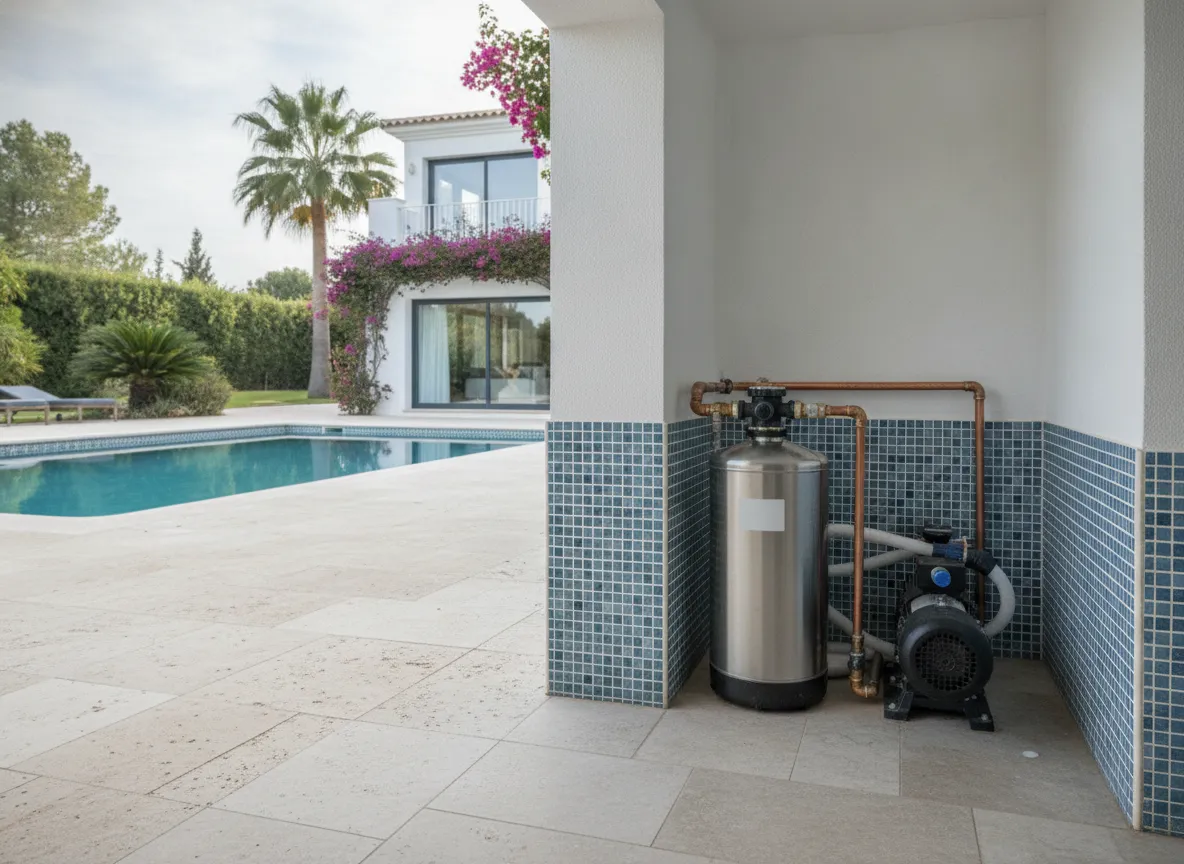
A seized circulation pump stops water movement instantly during high summer heat. Temperatures above thirty degrees turn stagnant pool water into an algae bloom within two days, forcing costly chemical shocks.
Cracked multi-port valves or broken filter laterals blow sand directly into the pool basin across properties in Marbella. Sand settles into bottom drains and scratches delicate pump impellers, leading to secondary mechanical failure.
Scaled salt chlorinator cells stop generating sanitiser silently while villas stand empty between visits. You return to cloudy water, fouled pipework, and an urgent recovery bill before the pool is safe to swim in.
Systematic diagnostics and mechanical repair of pool machinery
Electrical power isolation is performed — We switch off the main breaker in the plant room. A voltage tester confirms no power reaches the motor.
Suction and return lines are pressure tested — We pressurise pipework between skimmers and the plant room to identify hidden air leaks or cracked joints causing prime loss.
Pump housing is disassembled and cleared — We open the wet end to clear debris. Impeller vanes and mechanical seals are checked for damage.
Filter vessel media is extracted and examined — We remove filter media to check internal lateral pipes for hairline cracks that dump sand into the basin.
Salt chlorinator cell is acid descaled — We soak the titanium plates in a mild acid bath. This dissolves hard calcium crusts cleanly.
Perished seals and worn valves are renewed — We swap hardened O-rings and weeping selector valves for chlorine-resistant components to stop leaks.
Electric motor load is measured under operation — We verify running amperage and operating temperature against plate specifications to prevent motor overheating under load.
We cover the Costa del Sol
Service covers substantial residential villas and private estates situated along the coastal corridor.
Is this what you are looking at?
Shrill screeching from the pump housing
Worn internal metal bearings begin to screech once water sneaks past the shaft seal. Motors can usually be rebuilt with fresh bearings if caught before heat warps the casing windings.
Streams of air bubbles at return jets
Air gets pulled through cracked intake unions or perished rubber lid seals before water reaches the pump. Replacing degraded fittings restores full prime unless an underground suction pipe has cracked.
Wet concrete under the selector valve
Internal spider gaskets degrade from pool chemicals and allow pressurised water to bypass the waste port continuously. Fitting a fresh gasket stops water loss provided the plastic housing has not grooved.
Red light on the chlorinator box
A failed water flow switch or internal sensor prevents the chlorination unit from energising the cell plates. Resetting electronics or replacing the paddle switch normally restores sanitiser output right away.
Green waterline stains around brass valves
Stray electrical currents or acidic condensation slowly eat away at metal pipe threads inside humid pump rooms. Early re-bonding and fitting non-metallic isolators prevents sudden pipe bursts during peak summer circulation.
Does your villa need steady exterior care?
Response time: 24 hoursSatisfaction guarantee
High filter tank pressure indicates two different issues
A sudden climb on the filter tank pressure gauge often gets blamed on an oversized pump. In reality, a pump does not gain power over time. High pressure almost always starts with trapped dirt inside the tank restricting water flow. If the medium is clean, the restriction sits deeper in the pipework.
Cartridges last 1 to 3 years before the internal fabric pores plug permanently. Sand filters last longer, but the media still chokes on fine debris. Cleaning or renewing the filter media solves the pressure rise when the material has exceeded its clean operating baseline. If the gauge stays high immediately after a thorough wash, the restriction sits in the suction lines or return plumbing. Guessing wrong means buying replacement parts for a working filter while water flow stays blocked, risking motor bearing failure and a costly pump replacement.
Sand replacement intervals determine routine filter service
Sand filter tanks need periodic maintenance to keep pool water clear and circulation open. Homeowners easily manage basic weekly upkeep from the multiport valve, reversing the water flow to flush trapped dirt down the waste line. Over seasons of constant filtering, water friction rounds off the sharp edges of the sand grains until they can no longer trap finer particles.
Routine backwashing restores flow when the media is relatively fresh, taking only a few minutes. However, filter sand reaches the end of its useful working life after 5 to 7 years in service. At that stage, continuous backwashing merely wastes thousands of litres of treated pool water without clearing the haze. Our recommendation is renewing the filter sand completely to restore true filtration efficiency, whereas sticking to routine backwashing on old, rounded sand leaves the pool cloudy and forces extra chemical use.
Equipment pad condition determines the repair scope
Fixing heater components depends strictly on water chemistry. We check pool water acidity and chemical balance during the initial site inspection before any heating work begins. Acidic water attacks copper heat exchanger tubes within months, causing pinhole leaks directly into the combustion chamber. If parameters are outside manufacturer tolerances, pool water chemistry and balancing must be corrected first as a separate requirement on your quote, because installing new parts into corrosive water destroys the new components immediately and voids repair coverage.
Repaired pipe glue requires proper drying times to hold operating pressure. When pipework around the equipment pad is altered, the solvent cement must cure according to manufacturer temperature charts. Depending on pipe diameter and system pressure, this cure delay requires between 2 and 24 hours before the equipment runs again. Your quote accounts for this controlled curing window as dedicated installation time, preventing joint blowouts that flood the pad and burn out air-cooled electric pump motors.
Your questions, answered
How long does a pool equipment repair take? +
A component repair takes 1 to 3 hours, while a full unit swap takes 3 to 6 hours. Fresh PVC pipe joints require between 2 to 24 hours of drying time before the system can safely be turned back on under water pressure.
What keeps pool machinery running longest? +
Balanced water chemistry keeps motors and heaters running for up to 10 or 12 years. In warm climates like the Costa del Sol, corrosive water destroys metal heat exchangers within months, and running pumps dry ruins seals.
What usually breaks first over time? +
Shaft seals and rubber gaskets fail first, usually after 2 to 5 years. Early warning signs include small water drips beneath the pump motor, sudden air bubbles in the pump basket, or slight motor squealing.
What makes one equipment repair more expensive? +
Equipment squeezed into tight underground vaults costs more to fix because rigid PVC lines must be cut back and replumbed. Complex electrical faults on circuit boards also take more labor than swapping standard mechanical parts.
Can a cracked filter tank be repaired? +
No, a cracked filter tank must always be replaced entirely. Pressurized tanks operate under high mechanical force and cannot be glued or welded safely. We only provide complete unit replacements in these cases to keep the plant room safe.
How can poor past pipework be spotted? +
Look for heavy glue drips, unaligned pipes straining the pump casing, or tight plumbing lacking threaded unions. In older villas in Marbella, cramped setups often require cutting back rigid lines to rebuild the layout properly.
What happens if I am not happy with the pool equipment repair? +
Satisfaction guarantee. If you are not happy with a result, tell us and we come back to put it right.