Handed over clean, slip-resistant, and sealed
Calima dust and calcium scale eliminated
Porous surfaces shed baked mineral crusts and red sediment through targeted chemical dissolution rather than destructive pressure. The original mineral colouring, veining, and texture emerge without acid etching or dull grey patches.
Intact grout lines without joint erosion
Gentle mechanical agitation dislodges ingrained dirt without blowing out pointing mortar or destabilising terrace edges. Joints remain solid, uniform, and fully bonded to surrounding stone flags, preventing water ingress beneath the patio.
Restored grip and breathable protection
Slick organic biofilms are eradicated completely from shaded steps and wet pool surrounds to restore natural foot traction. Penetrating impregnators shield the stone against incoming rain while allowing subterranean moisture to evaporate harmlessly.
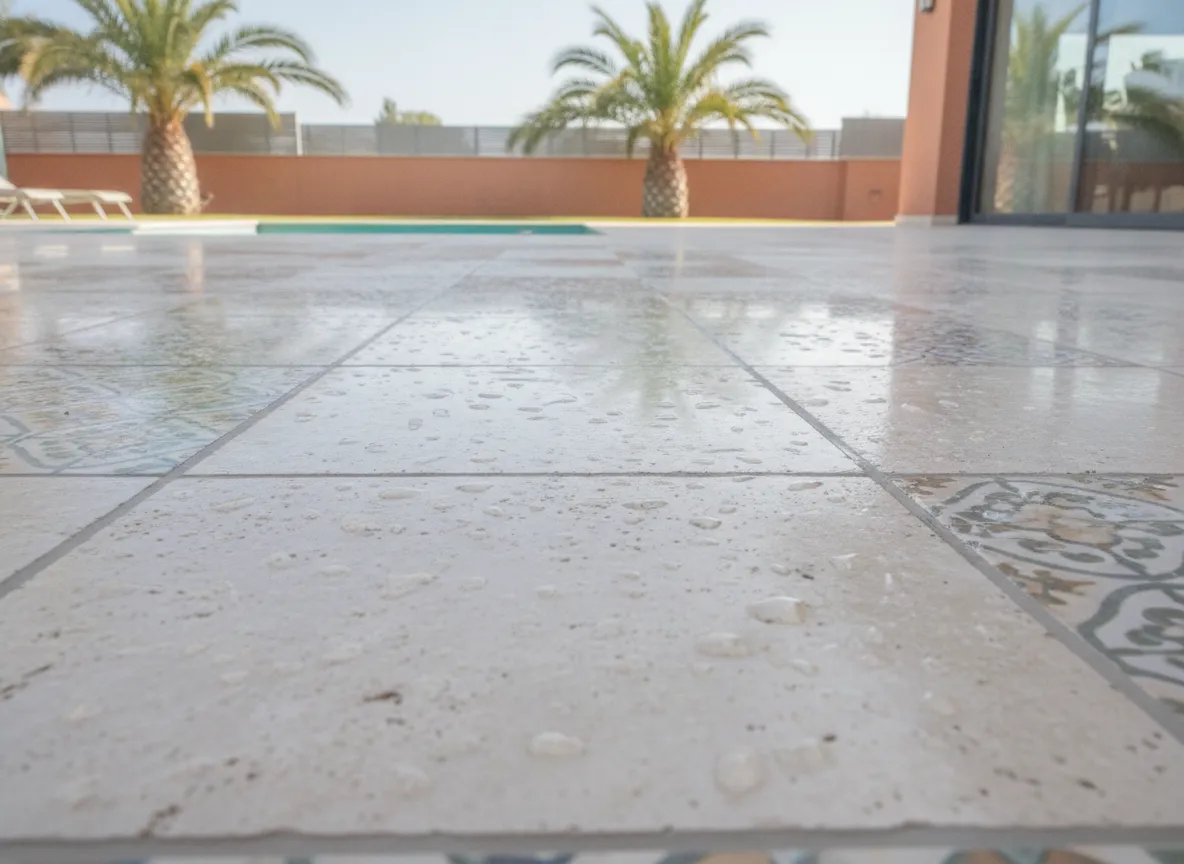
Saharan calima dust settles over outdoor living zones. It mixes with mineral pool splashes, creating a crust across unsealed tiles. Under intense southern sun, these deposits bake into the pores. The stone loses its natural colouration.
High-pressure lances strip pointing mortar out of joints. Water penetrates beneath unbonded slabs. Hollow sounds, loose flags, and costly repairs follow on villa grounds across the Costa del Sol.
North-facing pool borders and shaded steps develop slick green films. Garden hoses cannot shift ingrained biofilm. Terrace walkways remain slippery and dangerous until chemically broken down and extracted.
Seven stages of terrace care
Substrate condition is evaluated — We map stone composition, existing mortar soundness, and mineral buildup depth across all paved sections. Testing identifies whether tiles are porous limestone, polished marble, or unglazed clay before liquids are introduced. Surface stability confirms the exact chemical balance required.
Loose surface dirt is swept away — We clear dry desert grit, fallen pine needles, and calima dust using stiff mechanical brooms. Removing dry debris stops sandy particles turning into abrasive sludge. Clean perimeters ensure drainage channels stay clear.
Adjacent plant beds are thoroughly pre-soaked — We saturate surrounding soil, lawn edges, and planters with fresh water before washing commences. Damp roots refuse to absorb chemical runoff drifting past paving edges. We fit protective coverings over pool coping stones to prevent water balance contamination.
Mineral-lifting solution is applied — We apply detergents balanced for specific stone types across dirty surfaces. They dissolve calcium crusts and biological films. Solutions break the chemical grip of baked red sand without burning limestone. Dwell times vary depending on heat and staining severity.
Surfaces are scrubbed with rotary machinery — We use low-speed counter-rotating brushes to agitate soaked grout lines and textured stone faces without gouging the substrate. Mechanical action lifts stubborn algae and mineral bonding out of recessed tile pores. Mortar channels receive targeted brushing to loosen deep black mildew.
Suspended residue is rinsed under controlled pressure — We use wide-fan rinsing lances to flush liquefied dirt, dissolved minerals, and spent cleaners toward drainage points. Controlled low pressure leaves pointing mortar intact. Loosened grit is cleared completely, and stone dries evenly.
Breathable penetrating sealer is applied — We apply deep-penetrating impregnators into porous stone and mortar lines to block future moisture absorption. Vapour permeability allows underlying moisture to escape naturally without surface blistering. Finished surfaces resist future red calima rain and organic staining.
We cover the Costa del Sol
Terrace restoration and exterior surface treatments are carried out across private residential properties throughout the region. Large villa grounds, private pool surrounds, and extensive stone pathways receive scheduled care.
Does your villa need steady exterior care?
Response time: 24 hoursSatisfaction guarantee
Is this what you are looking at?
Red mud baked into terrace tiles
Intense summer heat bakes fine desert dust directly into unsealed micropores after light rainfall. A balanced mineral wash dissolves the sediment, leaving clean stone behind unless the silt sat damp for years.
White hard crust around pool edges
Evaporating pool splash water leaves dense calcium deposits layered across natural stone coping. Safe descaling agents dissolve this buildup, restoring the stone's flat texture provided minerals have not physically eaten the face.
Dark greasy patches by barbecue areas
Cooking fats soak straight through porous pavers and trap airborne dirt within open capillaries. Degreasing detergents lift the trapped grease, clearing the stain if tackled before hot sun permanently cures it deep.
Black damp shading along northern steps
Winter moisture lingers in constant shade, allowing micro-organisms to colonise the damp surface pores. Targeted anti-microbial washes eliminate the dark growth completely, leaving bare steps clean and slip-free underfoot.
Flaking stone dust along damp borders
Trapped ground salts crystallise behind the surface and push tiny flakes of outer stone away. Removing deep mineral salts stops active spalling, saving the remaining slab before structural fractures ruin the entire foundation.
Scheduling sealing during moderate or high heat
Applying a protective sealer preserves clean stone, but high temperatures dry the liquids out before they soak in. On sunny terraces, hot tiles cause water and solvent carriers to flash evaporate in minutes. Instead of entering the pores, the active ingredients dry right on top, leaving a sticky film that traps dust.
Sealing requires ambient and surface temperatures between 10 °C and 25 °C. If midday heat drives surface readings past 25 °C, we postpone work until cooler morning hours or mild weather. Trying to seal overheated stone ruins the finish and requires extra stripping work, while working inside this temperature window gives the 12 to 48 hours of proper drying needed before opening the area to traffic.
Grout stability and deep oil or mineral staining
During inspection, we first check the physical integrity of your grout lines across the entire paved surface. When joints are soft, powdery, or completely missing, pressurized washing will force water beneath the tiles and wash out the remaining bedding mortar. Soft joints require mechanical raking and tile, grout and joint repair as a dedicated first line item before any washing begins, adding labor hours and drying time to your quote.
During our survey, we then check whether discoloration sits on the surface or runs deep into the stone matrix. Standard rotary mechanical scrubbing clears ordinary surface dirt across a typical 30 to 60 m² terrace in 4 to 8 hours. If engine oil, cooking grease, or heavy mineral efflorescence has soaked deep beneath the surface, a targeted poultice extraction must be added to your quote, extending the schedule and material costs.
Your questions, answered
Can all loose or hollow tiles be saved with a clean? +
Deep cleaning only works on structurally bonded floors. If tiles are tenting, lifting, or sound hollow across large sections, the adhesive bed has failed. Those sections must be taken up and relaid by a tiler before any wet mechanical cleaning can start.
What causes stones to dull and pick up dirt quickly? +
Using regular household acidic cleaners or vinegar slowly etches sensitive stones like marble and limestone. The rough surface traps fine soil immediately. Detergent residues left behind from mopping also build up a sticky film that pulls in dirt from shoe traffic.
Does a penetrating sealer stop all future spills from staining? +
No, a penetrating sealer only slows down absorption to buy reaction time. In busy villas across the Costa del Sol, spills like red wine, oil, or citrus still leave marks if left standing. It keeps the stone breathable, but messes still require prompt wiping.
Why is there a cloudy film peeling off the terrace floor? +
Non-breathable topical coatings trap ground moisture beneath the surface, turning hazy and flaking off. On coastal properties in Marbella, sea humidity worsens this blistered finish. We strip off the old acrylic layer completely before switching to a vapor-permeable, penetrating impregnator.
Can outdoor stone be sealed straight after a pressure wash? +
No, stone and grout must dry out completely first. Penetrating sealers require between 12 to 48 hours of dry airflow before application. Trapping residual moisture inside the stone leads to hazy patches and prevents the chemical bond from curing properly.
Is skipping a deep chemical clean and using pressure alone smart? +
Blasting joints with excessive water pressure erodes the mortar and forces water under the tile bed. Proper alkaline cleaners break down surface oils safely with rotary brushes. Paying for grout repairs and damp remediation later costs far more than doing the chemical wash correctly.
What happens if I am not happy with the stone & tile cleaning? +
Satisfaction guarantee. If you are not happy with a result, tell us and we come back to put it right.