Every step outside feels solid, clean, and dry
Solid paving slabs with no hollow rocking
Re-bedded tiles rest on a solid layer of flexible adhesive with zero movement underfoot. Outdoor dining chairs, sun loungers, and heavy planters sit level without causing edge rocking or cracking across the patio.
Watertight joints protecting lower structures
Repointed seams and elastomeric membrane repairs prevent standing water from passing below the paving. Structural slabs remain dry through winter downpours, stopping damp spots and efflorescence from forming on garage ceilings below.
Uniform surfaces that stop calima accumulation
Freshly sealed grout lines sit flush with stone edges to block fine red dust and weed seeds from taking root. Terrace washing becomes fast and simple, keeping natural stone and marble free from grimy dirt lines along main walkways.
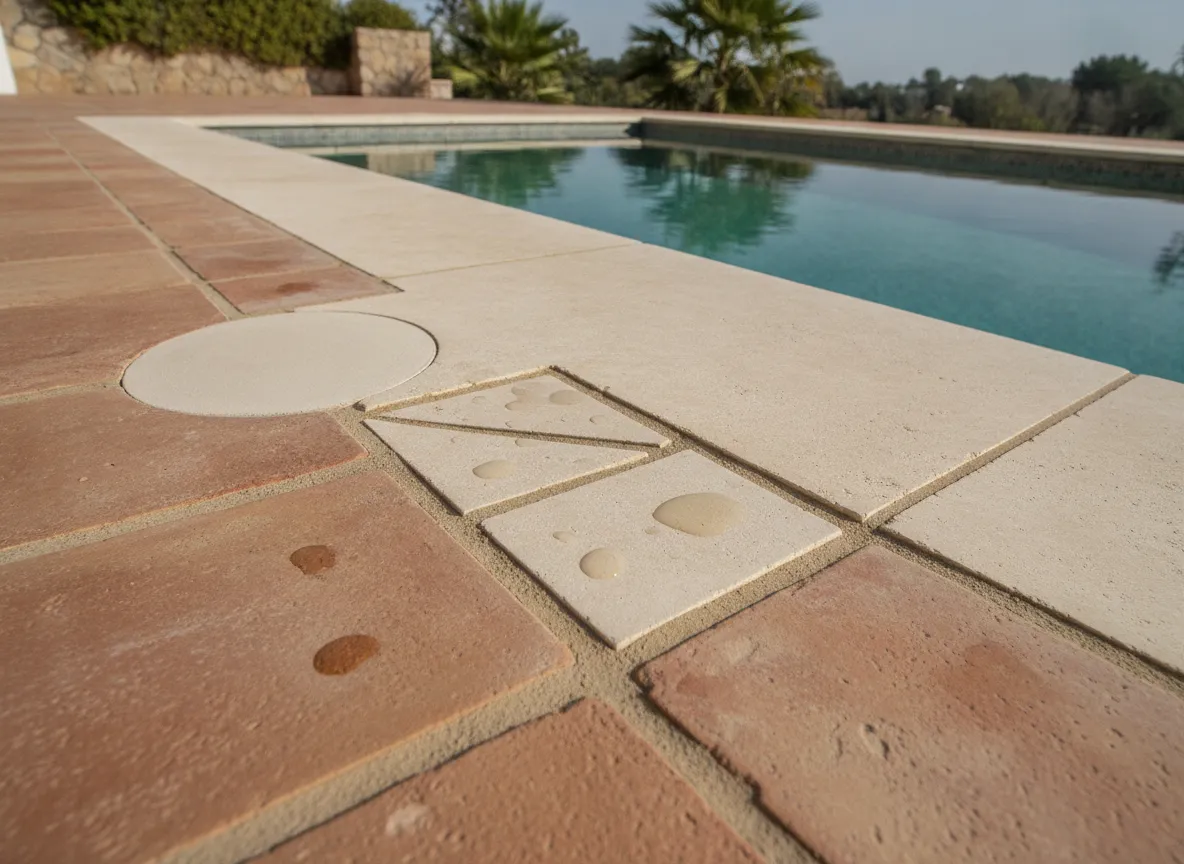
Hairline cracks in the terrace grout let winter rains bypass the surface tiles entirely. Moisture collects in the underlying sand-and-cement screed, saturating the bedding without evaporating under weak winter sun.
Persistent damp rots the sub-surface waterproofing membrane over time. Slabs on hillside villas in Benahavís let water track into lower ground rooms, storage cellars, or garages below.
What begins as loose perimeter tiles ends as structural concrete spalling and ruined interior ceilings. Repairing blown slabs and replacing decayed membranes inside occupied living areas costs ten times more than resetting tiles early.
The precise steps that secure your stone
The entire terrace is sounded — We tap every tile lightly with a nylon mallet to locate hidden hollow spots beneath the stone. Hollow sounds map out debonded screed sections before lifting begins.
Degraded grout lines are raked out — We rake grout and failed perimeter seals down to the full depth of the tile edge. Clearing the joint completely prevents pressure transfer and ensures fresh compound bonds directly to stone edges without popping loose.
Damaged tiles are lifted out — We raise cracked or loose paving units using edge chisels without chipping adjoining sound tiles. Careful removal keeps intact sections stable and preserves surrounding bedding integrity across the patio floor.
The substrate is ground back — We chip away blown mortar and loose screed until clean, solid concrete appears underneath. Grinding away crumbly debris creates a mechanical key for new bonding agents. This stops fresh adhesive from lifting after the first heat wave.
Waterproofing membranes are renewed — We coat exposed structural slabs with an elastomeric waterproof slurry tied into existing flashings. Sealing the bare surface keeps heavy Mediterranean rains from seeping through to rooms or storage below.
Tiles are set in flexible adhesive — We lay matching tiles using full-bed, polymer-modified exterior adhesive spread with a notched trowel. Buttering both substrate and tile eliminates air pockets that trap moisture or crack under heavy furniture.
Joints are filled with exterior grout — We fill paving lines with water-repellent, polymer-rich grout formulated to resist algae and mineral staining. Packing the mix deep into joints prevents calima dust from lodging in gaps, keeping lines intact during pressure washing.
Perimeter expansion joints are sealed — We fit closed-cell backing rod and UV-resistant polyurethane sealant to perimeter edges and structural movement joints. Elastic seals allow large tiled fields to expand freely in July sun without tenting against villa walls.
We cover the Costa del Sol
Terrace diagnostic assessments, tile re-bedding, and joint renewals are scheduled across private residential properties throughout the coastal corridor.
Does your villa need steady exterior care?
Response time: 24 hoursSatisfaction guarantee
Is this what you are looking at?
Raised tile edges tripping footsteps
Ground settling beneath the terrace slab slowly tilts individual paving stones out of line. Lifting and resetting them levels the walking path safely, provided the underlying concrete remains sound.
Cracked stone split across terrace steps
Repeated foot traffic on unsupported stone edges snaps the overhang cleanly away from the riser. Splicing or replacing the cracked tread restores a steady step, usually saving the surrounding masonry.
Pebbles crumbling out of terrace border
Exposed border edges lose their grip as sun and garden wash break down older bedding mortar. Rebuilding the perimeter footing locks the paving in place before outer stones drift into the soil.
Stained puddles lingering near villa doorways
Improper surface fall allows rainwater to collect against entrance thresholds instead of running toward drains. Regrading the local fall directs water away, protecting threshold seals from standing water damage.
Rust stains creeping from terrace railings
Rain penetrates unsealed anchor pockets around metal posts and oxidises the steel below the stone surface. Resetting the post base stops iron expansion before splitting forces shatter the surrounding tiles.
Polymeric joint sand or durable resin compound
Open gaps between patio slabs let intense sunlight, weeds, and heavy rainfall break down the bedding underneath. The practical choice between brush-in polymeric sand and a two-part resin mortar comes down to joint dimensions and how often work needs repeating. Choosing the wrong joint filler means joints crumble prematurely, letting rainwater wash away supporting material and forcing an avoidable re-pointing bill.
Polymeric sand works best for basic, narrower joints where simple dry brushing provides an adequate finish. A two-part resin compound forms an exceptionally durable seal that stays intact for 5 to 10 years before requiring localized touch-ups. When curing time matters, resin requires 24 to 48 hours before accepting foot traffic, while full strength for heavy outdoor patio furniture develops after 7 days. The resin material costs more per square meter initially, but it avoids the recurring maintenance cycles required by standard sands.
Mortar bed support and ground base stability
During our site visit, we check whether loose or rocking slabs sit on voids caused by spot bedding. Slabs placed on individual mortar dabs crack under daily loads because hollow pockets form underneath. When inspection shows these unbonded voids, re-securing them requires lifting the flags, applying an adhesive slurry primer, and setting them onto a complete wet mortar bed. This repair scope adds dedicated bedding materials and one to two days of labor to your quote.
The inspection also tests the compacted crushed rock base beneath the bedding layer. If this aggregate foundation remains solid and well-drained, the estimate covers only lifting and resetting the loose surface flags. If water infiltration or unstable soil has caused the sub-base to settle, a simple surface fix will fail within months. Your quote then expands to include mechanical excavation, sub-base remediation, and aggregate compaction before any paving stones can be re-laid.
Your questions, answered
Which material works best when replacing damaged terrace slabs? +
Porcelain tiles, concrete blocks, or natural stone like limestone are chosen depending on the existing terrace build. In sunny coastal villas across the Costa del Sol, porcelain or primed natural stone provides high durability against intense heat and heavy seasonal use.
Can new paving be laid directly over an old concrete base? +
Yes, if the concrete beneath is completely solid, free of cracks, and falls away from the house. Exterior tile adhesive or a slurry bond coat is used to fix the new stones directly onto the sound surface.
Why can sunken slabs not simply be repointed? +
Repointing alone will fail because moving slabs crack fresh jointing within weeks. We decline the work if a customer refuses ground repairs, as flags over an active, settling sub-base require complete lifting and re-excavation to stay level.
Will power washing and new sand stop terrace slabs from wobbling? +
No, washing the surface and brushing in new sand only cleans the joints. Unstable slabs wobble because the base underneath has washed out or cracked, which requires lifting the stone and replacing the bedding.
What makes one terrace repair more expensive than another? +
Total cost depends heavily on whether the underlying crushed rock base has failed. Tight garden access that prevents small diggers from entering, alongside high disposal fees for broken rubble, also increases the final price.
Do patio repairs require official building permits? +
Standard slab repairs do not need statutory approval. However, connecting altered patio runoff into municipal storm drains in towns like Marbella requires formal permits to comply with local rainwater regulations.
What happens if I am not happy with the patio and terrace repair? +
Satisfaction guarantee. If you are not happy with a result, tell us and we come back to put it right.