A sound boundary built to endure coastal exposure
Walls sealed against coastal elements
Masonry cracks are filled, stabilized, and finished with smooth or textured render matching adjacent surfaces. The cured coating stops water ingress from winter rains and keeps fine calima sand from eroding underlying brickwork.
Structural walls aligned and reinforced
Structural boundary or retaining walls are made plumb, sound, and capable of bearing soil or wind loads without shifting. Reinforced footings and tie-ins prevent perimeter movement caused by seasonal ground drying.
Perimeter fences secured and rust-free
We clean metal railings and fence posts of surface corrosion, treat them with rust inhibitor, and refasten them into place. Broken panels and hardware are replaced to reinstate complete visual privacy.
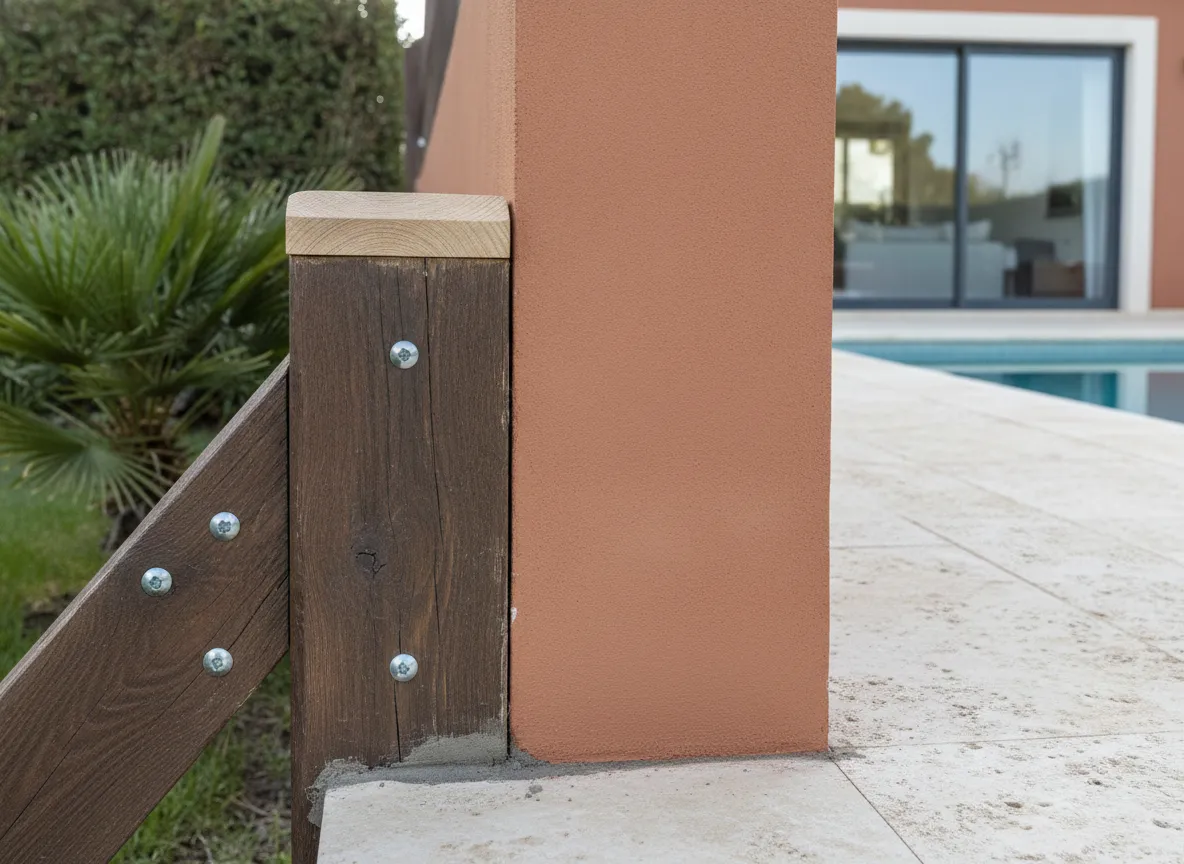
Hairline render cracks let winter rainwater penetrate directly into porous blockwork. Trapped moisture reacts with marine air. This rusts internal rebar and shears off exterior plaster sheets.
Unchecked rust eats through gate anchors and metal post bases. Fences become unstable during autumn windstorms. Leaning panels also allow aggressive roots from cypress or bougainvillea to push masonry fully out of level.
Postponing structural repairs turns minor patching into complete boundary demolition. That means heavy machinery, road access permits, and high replacement costs across the Costa del Sol.
How we restore structural boundaries from assessment to finish
Perimeter structures are thoroughly inspected — We check masonry blocks, retaining footings, and fence posts for hollow render, movement, and rust bleed. Root pressure from nearby garden plants is identified early.
Damaged render and masonry are removed — We chisel spalling plaster, loose coping stones, and fractured concrete blocks back to solid underlying structure. All debris is cleared out.
Internal steel and metal posts are treated — Exposed reinforcing bars and metal fixings are cleared of scale. We apply an anti-corrosion rust converter. Sound welds and mechanical anchors are verified before enclosing metal in new masonry.
Polymer repair mortars are built up — Salt-resistant structural mortars fill open voids and level the blockwork flush with the wall face. The material cures slowly under Mediterranean heat to prevent shrinkage cracks.
Surfaces are prepared with exterior primer — We seal repaired joints with a masonry bonding primer. It regulates absorption across old and new sections. This prevents moisture migration from delaminating fresh decorative coatings.
Elastomeric exterior render is matched and applied — We match textured or smooth render profiles to the villa's existing architecture. UV-stable exterior coatings form a continuous protective shell against marine air and calima dust.
We cover the Costa del Sol
Perimeter maintenance and structural repairs are provided for detached villas across the coastal corridor. Work covers boundary walls, fencing, and retaining structures on hillside and beachfront plots.
Does your villa need steady exterior care?
Response time: 24 hoursSatisfaction guarantee
Is this what you are looking at?
Wobbly metal fence posts in loose earth
Winter gales and dry clay soil loosen the footing collars around boundary poles. Solid bracing and compacted base collars usually restore stability before posts bend permanently.
Cracked capstones along the boundary edge
Thermal expansion breaks the brittle bedding joint directly under exposed stone caps. Rebedding the caps in flexible mortar keeps the perimeter weather-tight if done before water freezes below.
Sagging wire mesh between terrace railings
Creepers and strong sea breezes stretch older galvanized netting beyond its limit. Tensioning brackets and fresh wire ties bring back clean lines unless the metal strands have snapped.
Flaking white scale on garden blocks
Sprinkler spray pushes mineral salts through porous blockwork until surface layers flake off. Deep salt neutralisation stops the crumble, provided the blocks behind remain sound.
Diagonal stair-step cracks through outer masonry
Shifting hillside ground slowly pulls garden wall footings downward after heavy winter rains. Underpinning the foundation halts the movement, though hairline surface scars may remain visible.
Fencing height limits near streets determine council permits
Replacing a boundary fence or repairing a garden wall often seems like a straightforward maintenance task. The legal requirements change depending on where the boundary sits relative to public roads and pedestrian thoroughfares. Municipal planning exemptions typically allow simple repairs on private borders, but roadside edges follow much stricter height thresholds to protect line of sight and neighborhood layout.
Local rules require prior municipal planning permission whenever a rebuilt structure exceeds roadside height exemptions. Standard replacement without paperwork applies strictly to existing garden boundaries that remain safely within exempt limits. When work involves digging trenches or drilling new post holes near road boundaries, underground utility tracing must also be completed before breaking ground to protect buried lines.
Narrow garden access increases overall repair costs
Broken masonry walls, degraded timber posts, and heavy concrete footings require complete breakout and disposal during structural restoration. A single timber post replacement already demands 2 to 4 hours of hard physical work when digging out old footing concrete. That timeline expands rapidly whenever machinery or transport wheelbarrows cannot reach the work zone directly.
Wide entrances allow efficient handling of mixed aggregates, mortar, and heavy debris. Constricted side passages, narrow gates, and terrace steps force all heavy debris and bags of mortar to travel by hand. Our standard repair budgeting applies when pathways provide straightforward, direct clearance for equipment. An extra allowance for manual transport applies whenever materials and waste must pass through restricted corridors or flights of stairs, preventing surprise project overruns.
Your questions, answered
Do boundary repairs require formal permits or trade sign-off? +
General repairs do not require trade certification, but work on shared walls often involves statutory party wall regulations. On the Costa del Sol, underground utility tracing is also essential before mechanical trenching or digging deep post foundations.
How long will the repaired fence or wall last? +
Brick and stone walls offer a multi-decade lifespan when protected by breathable mortar joints and proper coping stones. Pressure-treated timber posts degrade faster due to soil moisture, though timber panels can be renewed independently as needed.
Can any leaning garden wall be reinforced? +
No, we recommend rebuilding if the foundation has suffered active rotational failure or catastrophic shear. Cosmetic repointing or cladding cannot correct broken footings, and solid fence panels should never be mounted onto lightweight walls not built for wind.
What protects a new installation from rapid decay? +
Isolating timber from wet soil using concrete gravel boards prolongs service life most effectively. Conversely, we do not encase timber posts entirely in solid concrete because it traps water inside hairline gaps at ground level, which rapidly accelerates hidden rot.
What ground conditions are required before building starts? +
Masonry boundary walls require stable, unyielding strip footings that must fully cure before bearing weight. In hillside villas across Benahavís, post holes must be dug into undisturbed soil or compacted aggregate sized specifically for local wind exposure.
Which materials are best suited for boundary boundaries? +
Choice depends on whether structure or cost matters most. Options range from pressure-treated softwood and composite boards to clay bricks, concrete blocks, or natural stone, all secured with corrosion-resistant A2 or A4 grade stainless steel fixings.
What happens if I am not happy with the fence and wall repair? +
Satisfaction guarantee. If you are not happy with a result, tell us and we come back to put it right.